How the Stitch Plate™ Works
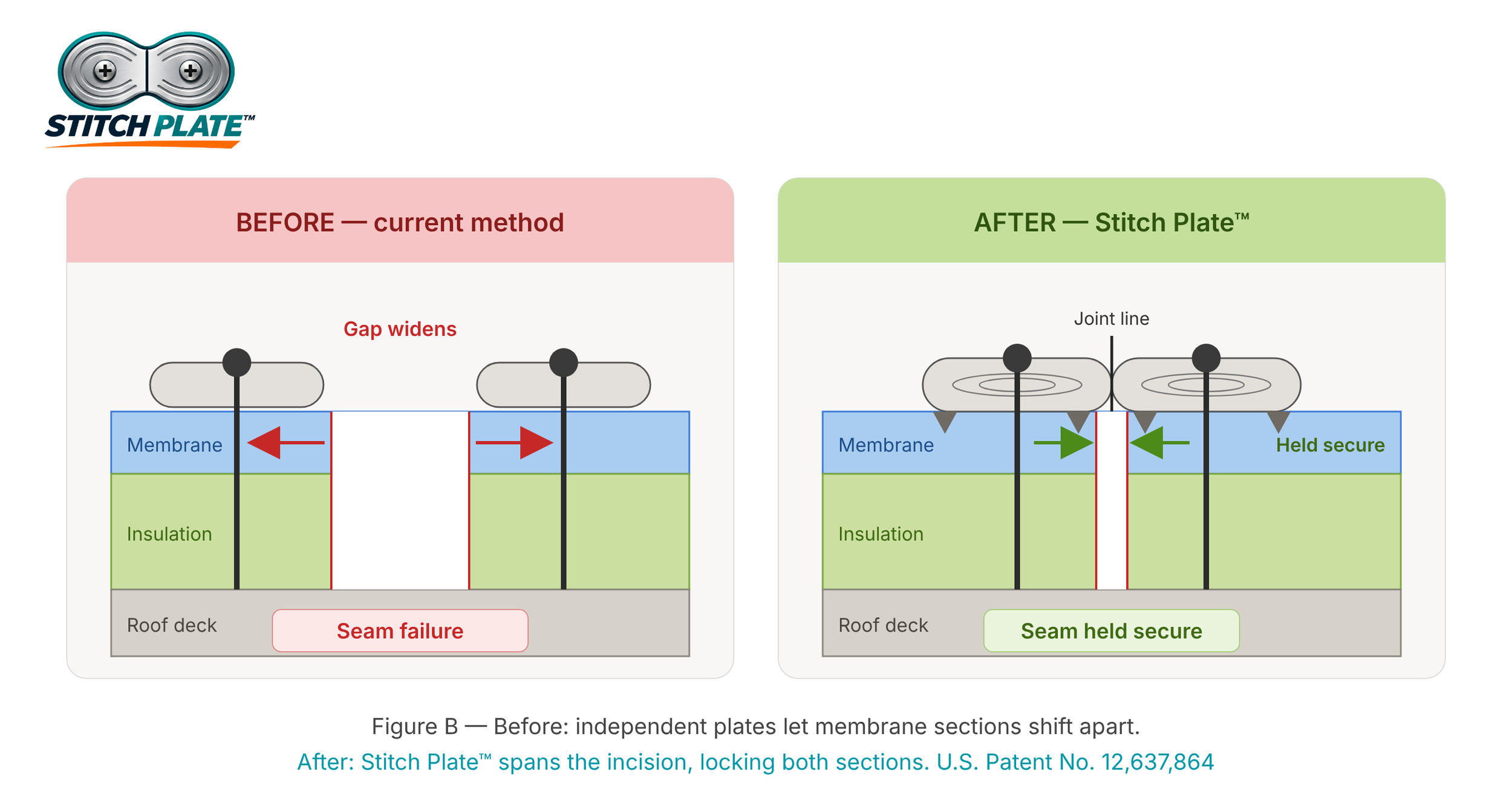
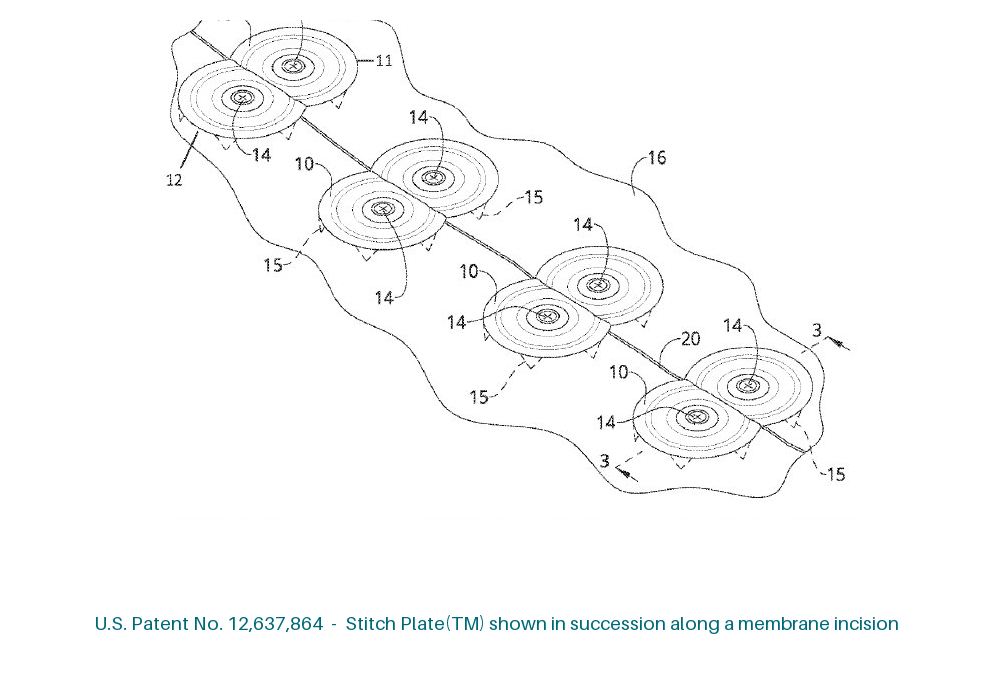
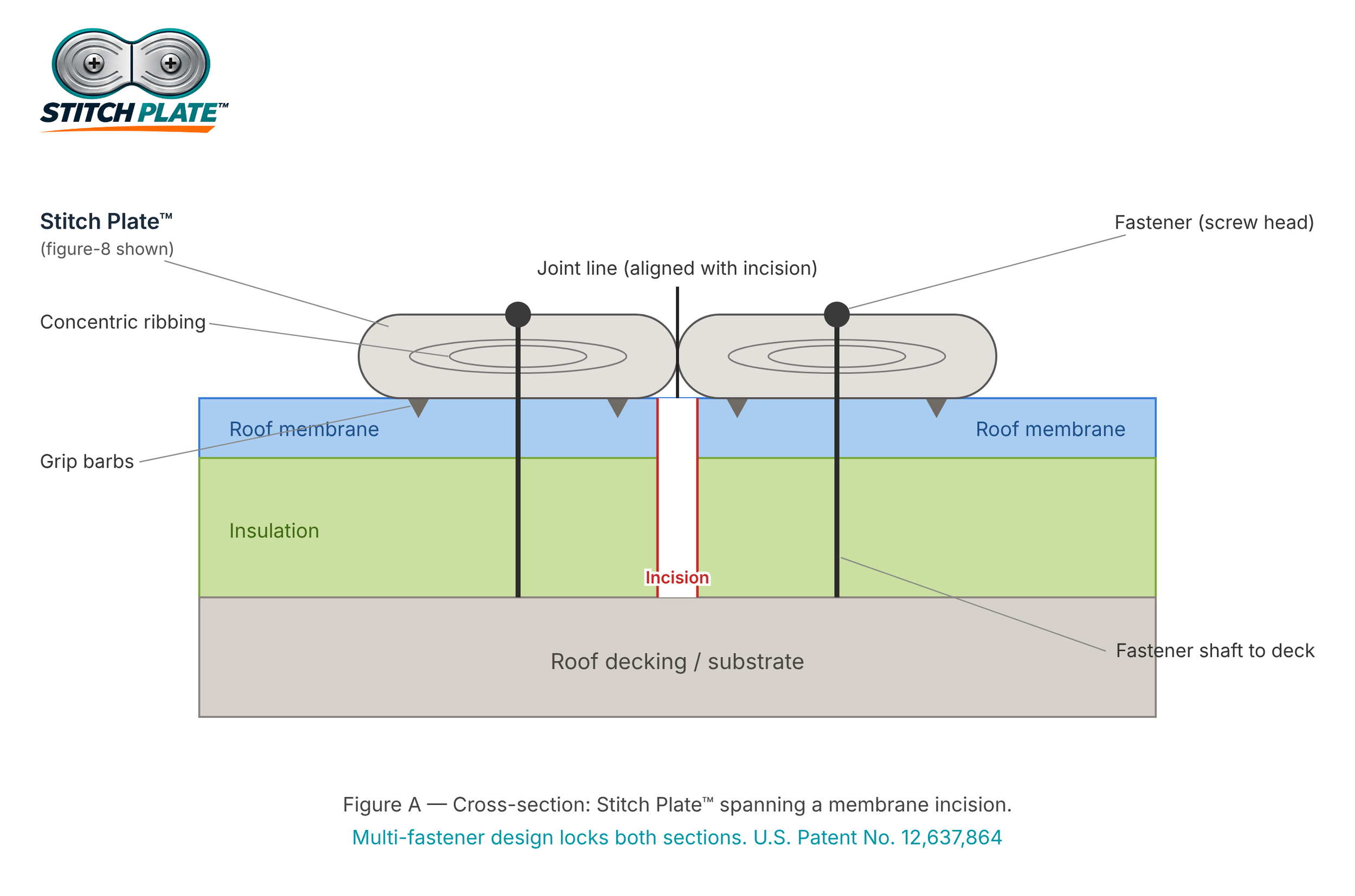
The Stitch Plate™ bridges a membrane incision as a single structure. The joint line at the center aligns precisely with the cut. One or more fasteners on each side penetrate the membrane, insulation, and deck, locking both sections as a unified unit. Downward-facing barbs grip the membrane surface to resist rotation and wind uplift. Concentric ribbing provides rigidity with controlled flexibility — the feature the USPTO cited as novel over all prior art.
Available as a standalone plate or as a complete repair kit with fasteners.
Features
Multi-fastener design — a fastener on each side of the incision
Multiple configurations — figure-8, triangular, rectangular, and oval
Multiple materials — galvanized steel, aluminum, stainless steel, polymer, composite
Multiple sizes — scalable to any incision width
Compatible with all major membranes — TPO, EPDM, PVC, modified bitumen
Kit available — plate and fasteners as a complete repair system
Works with silicone, polyurea, elastomeric, and other restoration coatings
Applications
Insulation replacement incisions
Moisture survey and core-sample closures
Decking and substrate repair access points
Existing failing seams from shrinkage or age
Wind uplift damage at seam locations